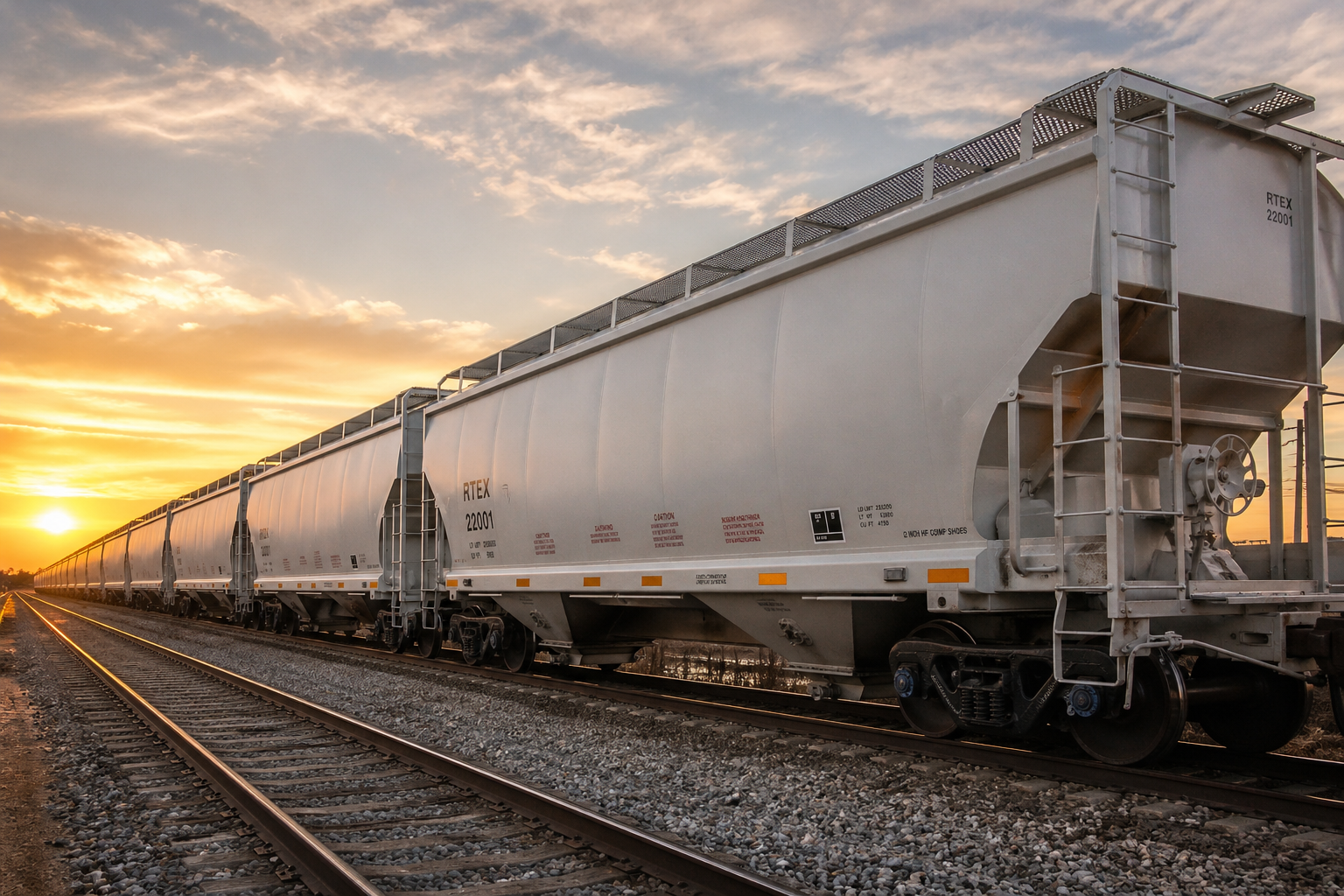
Getting Started with Railcar Leasing: A Beginner’s Guide

Getting Started with Railcar Leasing: A Beginner’s Guide
For companies moving bulk commodities, rail can be one of the most efficient and cost-effective transportation options available. But for businesses new to rail shipping getting started can be difficult.
If you’re exploring railcar leasing or shipping for the first time, here’s a straightforward guide to help you understand the basics and make informed decisions. Of course you can contact us here at RTEX Railcar Leasing and Sales and we’ll be happy to walk you through the process.
Why Lease Railcars?
Leasing railcars gives shippers greater control over their supply chain compared to relying solely on railroad-provided equipment. Railroads are limited in the excess equipment available and consistency is not always there.
Key benefits include:
- Improved availability – Avoid delays caused by railroad equipment shortages
- Consistency – Use the same car types tailored to your product
- Flexibility – Scale your fleet up or down as your business changes
- Cost control – Predictable monthly lease rates vs. fluctuating freight conditions
For many shippers, leasing becomes essential once volumes grow or service reliability becomes critical.
Speak to your Railroad
A critical early step that should be done is speaking with your local railroad. It is important to know if the railroad will provide service to your site and how often. The railroad will also be the party providing shipping rates once you are able to find the appropriate railcars.
Railcar Configurations
Choosing the right railcar is one of the most important steps. A few common examples:
While you might know your general car type needed each car has many configurations and sized. Here are some examples
- Covered hoppers – Plastic pellet hoppers, gravity gate cars, pressure differential, gravity pneumatic.
- Tank cars – crude tanks, pressure tank, top operated vales, lined/unlined.
- Gondolas – large cube, end door gondolas, mill gons, 66’ gondola.
- Flatcars – bulk head flat, wheel flat, intermodal.
These are only some examples of some of the configurations available. Understanding what you need is very important as you being this process.
Lease Types Explained
Not all leases are the same. The structure you choose impacts both cost and flexibility.
- Full-service leases
The lessor handles maintenance, compliance, and repairs. Best for companies new to rail. - Net leases
Lower monthly cost, but you’re responsible for maintenance and regulatory compliance. - Short-term vs. long-term leases
- Short-term: flexible, higher monthly rates
- Long-term: lower rates, more commitment
For new entrants, full-service leases are typically the easiest starting point. Lease term generally fall between 3-5 years in length, but market conditions and industry norms for a specific car type can effect this.
What to Expect in the Leasing Process
Leasing railcars isn’t instant like booking a truck—it requires planning.
Typical steps include:
- Define your commodity and shipping needs
- Coordinate with your railroad(s)
- Select the appropriate railcar type
- Determine lease structure and duration
- Finalize delivery and start shipping
Lead times can vary depending on car type and market demand, so early planning is key.
How RTEX Supports New Rail Shippers
At RTEX, we work with companies at every stage—from first-time rail users to experienced shippers scaling their operations.
We offer a broad range of railcar types to support various commodities and can help guide you through:
- Selecting the right equipment
- Structuring your lease
- Understanding operational requirements
- Planning for long-term growth
Final Thoughts
Railcar leasing can seem complex at first, but with the right partner and a clear understanding of your shipping needs, it becomes a powerful tool for improving efficiency and reliability.
If you’re considering making the shift to rail—or expanding your current operations—leasing the right railcars is a critical first step. Please reach out to us for more information HERE. We are a small family owned business ready to help.