

RTEX Railcar Leasing & Sales provides tank cars for the safe and compliant transportation of liquid and gaseous commodities across North America. Tank cars are built to strict regulatory standards and are engineered to handle a wide range of chemical, energy, and industrial products.
Selecting the appropriate tank car requires careful consideration of commodity classification, pressure requirements, lining compatibility, and loading and unloading systems. RTEX works with shippers to ensure proper equipment alignment with regulatory and operational requirements.
What Is a Tank Car?
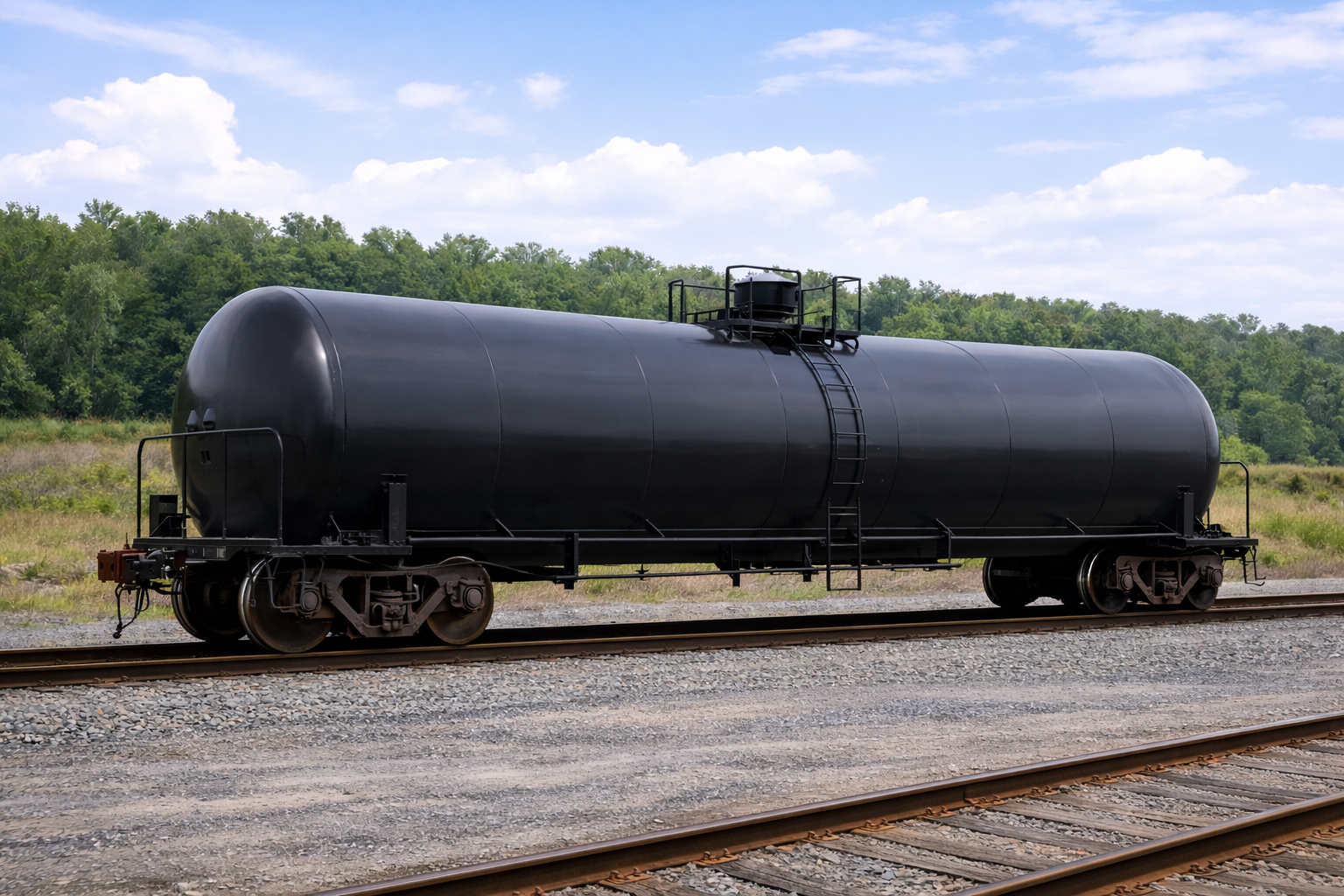
A DOT 111 general service tank car — the most common non-pressure tank car type.
A tank car is a cylindrical pressure or non-pressure vessel mounted on a railcar underframe, used to transport liquid, liquefied gas, and certain gaseous commodities by rail. Tank cars are regulated under DOT/AAR specifications and must be matched to the specific commodity being shipped — including its chemical properties, temperature sensitivity, and pressure requirements.
Unlike most freight cars, tank cars are often commodity-specific. A car used for ethanol cannot simply be switched to caustic soda without cleaning, relining, and regulatory re-qualification. RTEX helps shippers navigate equipment compatibility before placing a lease.
Tank Car Configurations
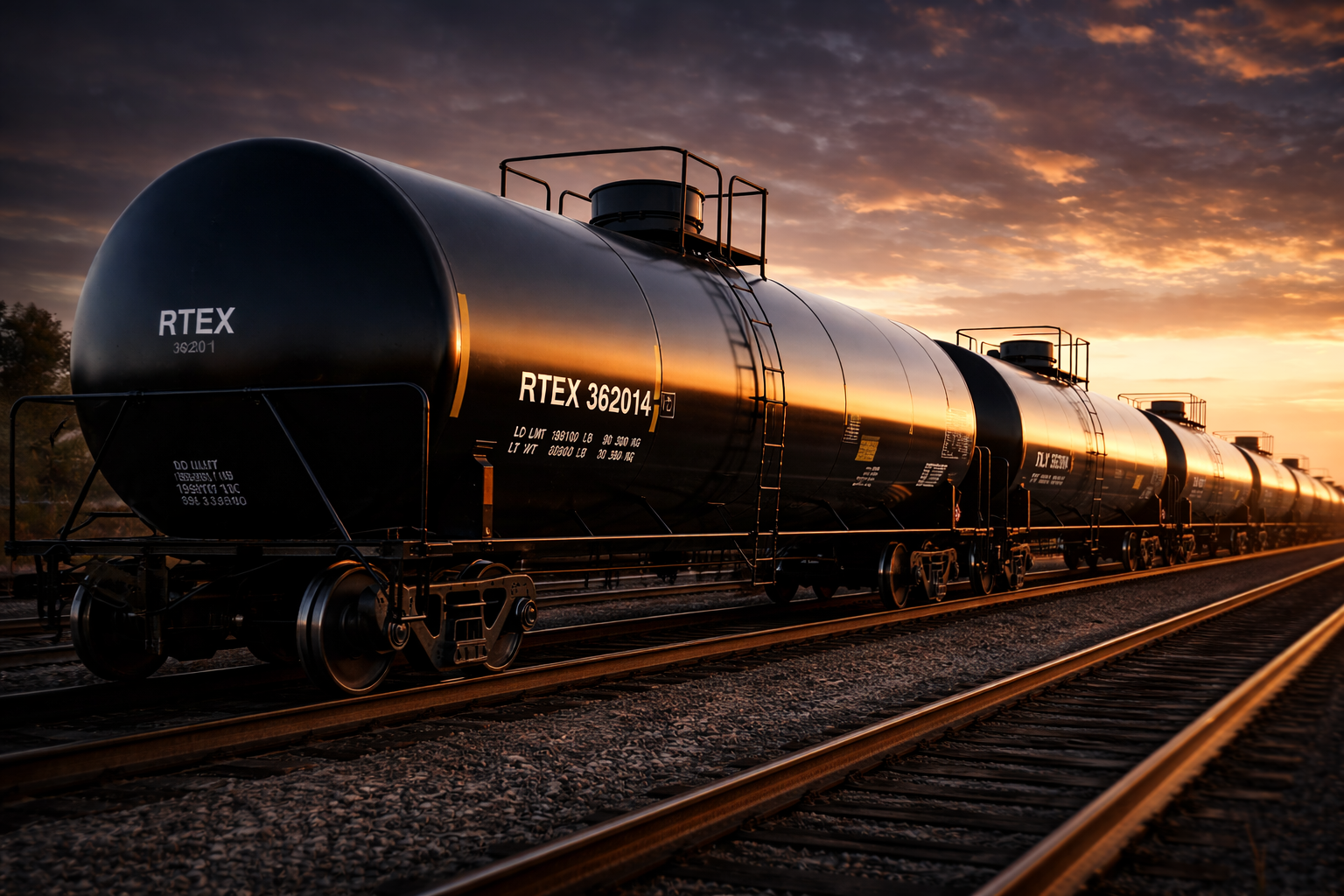
Tank cars are classified by specification (DOT/AAR), pressure rating, and commodity suitability. The three most common categories in RTEX's market are:
Tank Car Specifications
Key specifications vary widely by car type. The table below summarizes common tank car categories in North American service:
| Specification | Typical Capacity | Pressure Rating | Common Commodities |
|---|---|---|---|
| DOT 111 / TC-117 | 20,000–34,500 gal | Non-pressure | Ethanol, petroleum, vegetable oils |
| DOT 105 / 112 | 11,000–33,000 gal | 100–500 psi | LPG, anhydrous ammonia, chlorine |
| Coiled & Insulated | 16,000–30,000 gal | Non-pressure | Asphalt, molasses, tall oil |
| Lined/Specialty | Varies | Varies | Acids, food-grade, industrial chemicals |
Not sure which tank car specification is right for your commodity? Contact RTEX — we work with shippers to confirm commodity compatibility before placing equipment.
Commodities Shipped in Tank Cars
Tank cars serve a wide range of liquid commodity markets. RTEX has experience sourcing and leasing cars for the following:
| Category | Examples |
|---|---|
| Energy & Petroleum | Crude oil, fuel oil, diesel, gasoline, ethanol, biodiesel, condensate |
| Chemicals | Caustic soda, sulfuric acid, hydrochloric acid, sodium hydroxide, solvents |
| Agricultural & Food | Liquid fertilizers, vegetable oils, corn syrup, molasses, food-grade liquids |
| Industrial Gases | LPG, anhydrous ammonia, propane, chlorine, liquid CO2 |
| Specialty Chemicals | Resins, adhesives, industrial acids, tall oil, asphalt |
Industries Served
- Petroleum refiners & distributors
- Chemical producers & distributors
- Agricultural chemical manufacturers
- Food & beverage processors
- Ethanol producers & blenders
- Industrial gas companies
- Asphalt & road products companies
- Liquid fertilizer producers
Lease or Buy a Tank Car Through RTEX
Flexible Leasing. Personal Service. Fast Decisions.
At RTEX, every lease is structured around your specific needs. We work with shippers and rail-served facilities of all sizes — and every transaction is handled directly by a principal with the authority to get the deal done.
- Short-term, long-term, and multi-year lease agreements
- Customized rate structures based on fleet size and commitment
- Cars sourced from our network across North America
- You deal directly with decision-makers — never a call center
- Sales, brokerage, and remarketing also available